System Installation
Gas installations involve the installation of gas appliances, pipework, and associated systems. Here is a brief summary of what a typical gas installation might involve:
- Design and Planning: The engineer will work with you to design and plan the gas installation, taking into account the appliances you want to install and the available space.
- Gas Pipe Installation: The engineer will install the gas pipework, ensuring that it is safe and free from leaks and of adequate size for the output of the appliances.
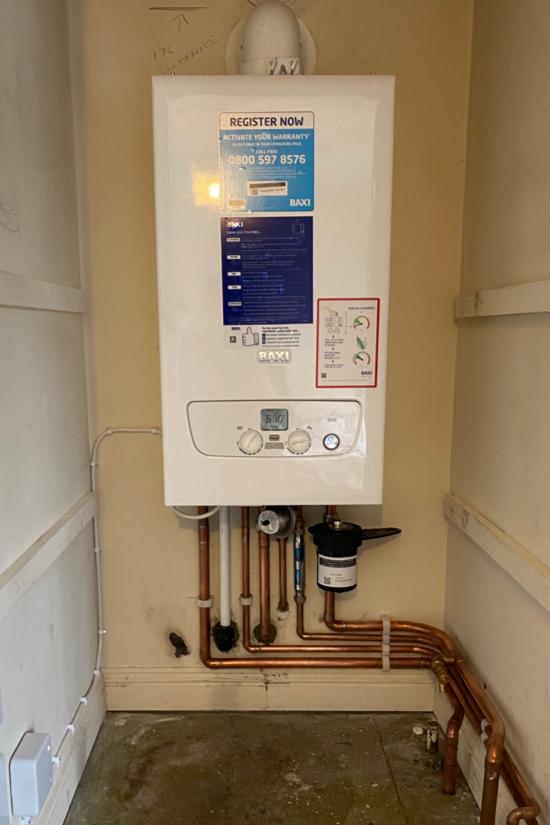
- Appliance Installation: The engineer will install the gas appliances.
- Testing: Once the installation is complete, the engineer will perform a range of tests to ensure that everything is working properly and that there are no leaks or other safety issues.
- Certification: If everything is found to be safe and working properly, the engineer will issue a certificate to confirm that the gas installation complies with all relevant safety regulations and standards.
Overall, a gas installation is a complex process that requires expertise and experience to ensure that everything is installed safely and working properly. It’s important to use a qualified and registered gas engineer to carry out any gas installation work to avoid any potential safety risks.
Type of boilers
There are several types of boilers, including combi boilers, system boilers, and heat-only boilers. Combi boilers provide heating and hot water on demand without the need for additional tanks, making them space-saving options. System boilers require a separate hot water storage cylinder but are suitable for homes with multiple bathrooms.
- Combi boilers are best for smaller households as only one hot tap can be drawn at any time. Hot water is heated instantly, so you need good mains water pressure.
- System boilers store hot water in a cylinder, so multiple hot taps and showers can be drawn simultaneously. They are sealed units, so need decent mains water pressure to work well.
- Heat-only boilers also store hot water in a cylinder, but the system is gravity fed, which means you need extra tanks in the loft. These are best if you live in an area with low pressure water and your home has multiple occupants.
What size boiler do I need?
Consider the size, layout, and insulation levels, as well as the number of bathrooms and radiators. This information will help you determine the boiler size needed to adequately heat your space.
Count your radiators
A good way of determining the size of boiler you need is to count your radiators around the home. Obviously the more you have, the more power the boiler will need to deliver to make sure they are all piping hot. As a ball-park estimate, you’ll need the following power outputs for the number of radiators for a combi boiler:
- Up to 10 radiators: 24–27 kW
- 10 to 15 radiators: 28–34 kW
- 15 to 20 radiators: 32–40 kW
And for a heat only or system boiler:
- Up to 10 radiators: 12–15 kW
- 10 to 15 radiators: 18–24 kW
- 15 to 20 radiators: 30–40 kW
Combi boilers need more power because they heat up the hot water instantly, whereas system and heat only boilers do it more slowly by circulating hot water around the cylinder. So while combi boilers might look much less efficient, they are different systems.
You will only ever have the combi boiler fired up to max for the few minutes of the day when you’re washing, bathing, showering or washing up, whereas system and conventional boilers will be boiling for longer as they heat up the whole cylinder.
LEAVE IT TO THE PROFESSIONALS